

Key Takeaways
- Referral dropout for BIPOC, Hispanic, Asian, immigrant, and bilingual patients in DFW often happens between the initial conversation and the second therapy session, driven by intake friction, language gaps, unclear costs, and cultural mismatch.
- North Texas behavioral health shortage designations and fragmented psychiatry-counseling disciplines make same-week intake, integrated care under one team, and telehealth access across Texas decisive factors for minority patients.4,7
- Parity laws exist federally, but CMS oversight gaps mean referring providers should weigh whether a practice verifies benefits during intake and gives a real-dollar estimate before session one.1,2,3
- Before sending a referral, compare intake speed, clinician language and cultural matching, psychiatry-therapy coordination, Plano or Southlake versus telehealth options, and whether the receiving practice closes the loop with a referral letter back.
Why Referrals Stall Before the First Session
You’ve identified a patient’s mental health needs, provided a referral, and yet, months later, there’s no record of an intake or treatment. This common scenario highlights a significant challenge in mental health referrals: dropout often occurs somewhere between the initial conversation in your office and the patient’s second therapy session.
For patients from Black, Indigenous, and People of Color (BIPOC) communities, as well as Hispanic, Asian, immigrant, and bilingual individuals, this gap can be even wider. The reasons are varied, ranging from impersonal intake processes and language barriers to unexpected costs and a perceived cultural mismatch with the clinician. Mind Body Optimization (MBO) addresses these issues through its intake process, diverse clinical team, broad insurance acceptance, and consistent communication with referring providers, aiming to ensure your patients receive and continue care that truly fits their needs.
The Referral Workflow Challenge: Cultural Fit and Access
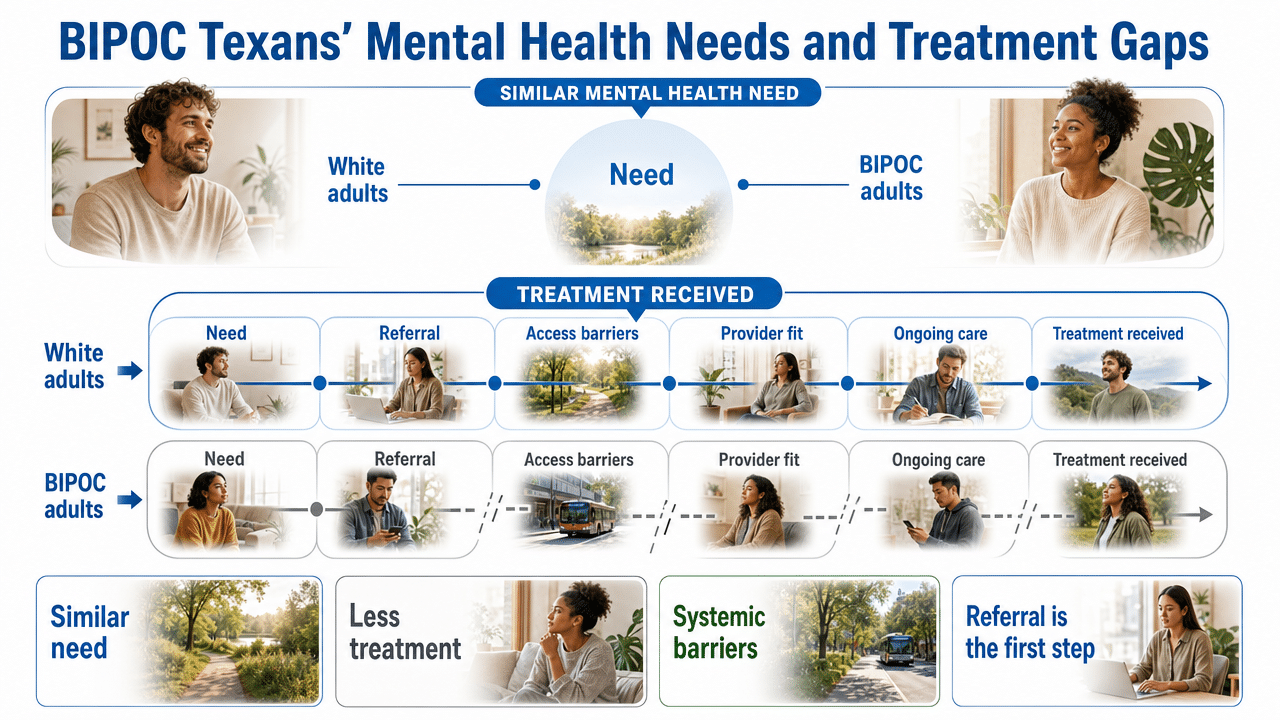
BIPOC Texans’ Mental Health Needs and Treatment Gaps
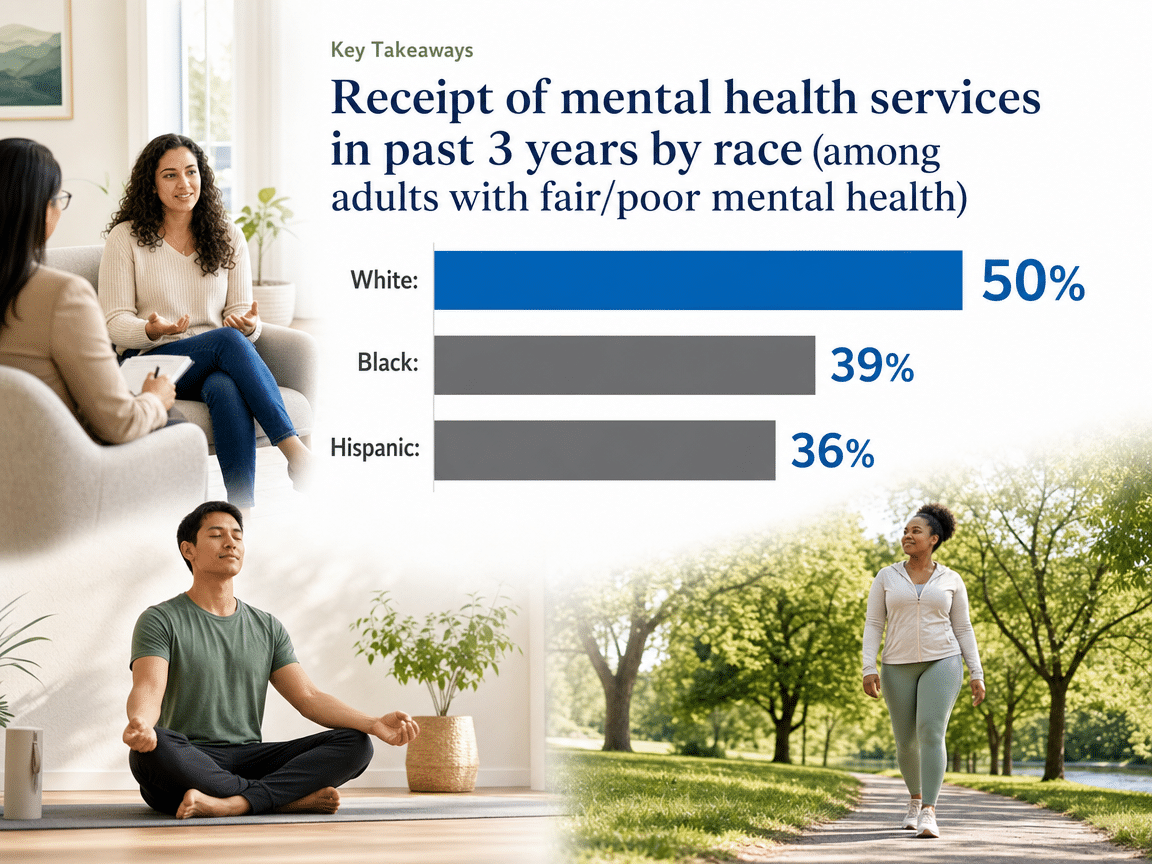
BIPOC individuals in Texas experience mental health disorders at rates similar to White individuals, yet they consistently receive less treatment. This disparity isn’t due to a lack of need but rather systemic barriers in accessing care. The challenge isn’t in diagnosing the problem but in navigating the logistical hurdles that prevent patients from reaching and staying with a suitable provider.6
It’s crucial to understand that this data doesn’t imply higher symptom rates among minority patients. Instead, it highlights that when these patients present with conditions like anxiety, depression, trauma, or substance use concerns, their journey from your office to effective treatment is more prone to disruption. The referral process, therefore, extends beyond a clinical recommendation; it’s the first step in a chain that must withstand challenges related to scheduling, insurance, intake, and the initial therapeutic encounter.
Common Points of Dropout Between Referral and Session Two
Many factors contribute to patient dropout, often unseen by the referring provider. These can include:
- Unanswered phone calls to the receiving practice
- Impersonal intake coordinators
- Unexpected out-of-pocket costs
- New-patient paperwork sent in a language the patient doesn’t comfortably read
- Technical difficulties with telehealth setups
Even the first session can be a point of failure if the clinician lacks familiarity with the patient’s family dynamics or cultural context, or if the scheduling system offers follow-up appointments too far in the future. These seemingly minor operational details—who answers the phone, the efficiency of intake, and the initial experience of the first session—are critical in determining whether a patient returns for subsequent appointments. A truly culturally responsive referral partner prioritizes these operational choices to ensure continuity of care.
Addressing DFW’s Behavioral Health Workforce Shortage
Impact of Shortage Designations on Referrals in North Texas
The behavioral health workforce shortage in Texas, particularly within the DFW metroplex, significantly impacts referral success. Mental health professional shortage areas are prevalent across North Texas counties, meaning that finding available providers, especially those who accept specific insurance plans or offer specialized services, can be challenging. This scarcity often leads to long wait times, with appointments sometimes scheduled weeks or months out.4
For minority patients, these challenges are compounded. The pool of in-network providers shrinks further when filtering for language proficiency, evening availability, or cultural competence. This scarcity underscores why services like same-week intake and widespread telehealth options are not just conveniences but essential components for successful referrals in this market.
The Advantage of Integrated Psychiatry and Counseling
Texas faces critical gaps across various behavioral health disciplines, including psychiatrists, psychologists, counselors, and social workers. This fragmented landscape often forces patients to seek medication management from one practice and therapy from another, creating logistical burdens that can lead to stalled referrals. Patients needing both medication evaluation and trauma-informed therapy, for example, often struggle to coordinate care across multiple providers, each with their own intake processes and waitlists.7
Mind Body Optimization addresses this by integrating psychiatry and counseling services under one roof. This means a patient referred for depression with potential bipolar features can receive psychiatric evaluation, medication management, and individual counseling from a coordinated clinical team. Similarly, individuals with co-occurring substance use concerns can access dual diagnosis treatment within the same care plan, simplifying the process for both the patient and the referring provider. This integrated approach reduces the number of handoffs, increasing the likelihood that patients remain engaged in treatment.
MBO’s Intake Process for Referred Minority Patients
From Referral to First Session: The Operational Flow
When you refer a patient to Mind Body Optimization, the intake process is designed for efficiency and clarity. An intake call is initiated the same week, preventing the loss of motivation that often occurs with delayed contact. A coordinator verifies insurance benefits and provides a clear, upfront cost estimate for the first session. This transparency addresses a common reason for dropout: patients ghosting appointments due to uncertainty about costs.
The intake itself is not a rigid checklist but an individualized conversation. A clinician explores the patient’s specific concerns—anxiety, depression, trauma history, sleep patterns, substance use, family context, and previous treatment experiences. This personalized approach, rather than a generic script, is particularly important for patients who may have felt rushed or misunderstood by previous healthcare systems. Following intake, the patient is matched with a psychiatrist, counselor, or both, based on their needs. If medication is considered, a psychiatric evaluation is scheduled within the same practice. If specialized therapy like EMDR or dual diagnosis support is required, it’s integrated into the same care plan. This streamlined process ensures one intake, one chart, and one coordinated team, transforming a complex referral into a single, cohesive handoff.
Language Access, Clinician Matching, and Front-Desk Variables
Successful referrals often hinge on factors invisible to the referring provider, such as the warmth of an intake call, the clarity of benefits explanations, or the cultural sensitivity of initial paperwork. MBO’s clinical team in DFW is diverse, reflecting the community it serves. Clinicians bring varied cultural, linguistic, and lived experiences, and patient matching during intake considers preferences for language (e.g., Spanish-speaking clinicians), faith context, or understanding of specific immigration experiences. This ensures that the match is built on genuine understanding, not just clinical expertise.
The front-desk experience is equally vital. A welcoming, unhurried intake call and patient-centered paperwork contribute significantly to a patient’s comfort and willingness to continue. These elements, though not reflected in a referral confirmation, are crucial in determining whether a patient remains engaged in care or disengages entirely.
Convenient Locations and Telehealth Options
Geographic accessibility is another critical factor in treatment adherence. Long commutes through DFW traffic can deter patients from attending appointments. MBO addresses this with in-person clinics in Plano and Southlake, serving patients across Collin, Denton, and Tarrant counties. For those unable to access these locations, telehealth psychiatry and counseling are available across Texas. This flexibility ensures that patients, whether bilingual individuals in southern Dallas, immigrant families in Arlington, or hybrid workers in Frisco, can maintain their care plan without logistical barriers determining their participation.
Insurance and Parity: Overcoming Access Barriers
While the Mental Health Parity and Addiction Equity Act mandates that mental health and substance use care receive treatment limits no more restrictive than medical care, and Medicaid and CHIP programs adhere to similar federal parity requirements 2, true access remains a challenge. A 2024 HHS Office of Inspector General report indicated that CMS’s oversight of states’ compliance with parity requirements has been inadequate. This often results in prior authorization hurdles, narrow behavioral health networks, and outdated provider directories, despite insurance cards indicating coverage.1,3

Integrated vs. Fragmented Referral Paths
The structural differences in referral pathways significantly impact whether a patient receives consistent care. The Texas behavioral health workforce shortage often forces patients needing both medication evaluation and ongoing therapy to navigate multiple practices, each with its own intake, benefits checks, and waitlists. This places the burden of coordinating care on the patient, which is particularly challenging for someone already struggling with their mental health.7
Here’s a comparison of fragmented versus integrated referral paths:
| Aspect of Referral | Fragmented Path | Integrated Path at MBO |
|---|---|---|
| Intake Process | Separate intake calls and paperwork for each practice. | One intake call, one chart, one comprehensive care plan covering psychiatry and counseling. |
| Cultural & Language Matching | Relies on directory filters and chance; often identified only during the first session. | Addressed during the intake call to match the patient with a suitable clinician. |
| Psychiatry & Therapy Coordination | Patient relays updates between separate practices that do not share notes. | Psychiatric evaluation, medication management, and counseling are coordinated within the same clinical team. |
| Insurance Verification | Patient contacts their plan, receives vague copay ranges, and hopes for the best. | Benefits verified during intake, providing a precise dollar figure before the first session. |
| Communication to Referring Provider | Often none; referral failure is discovered when the patient returns in crisis. | Referral letter sent back to the referring provider, with updates as care progresses. |
| Access Points | Patient travels to whichever practice has an opening, regardless of convenience. | In-person options in Plano or Southlake, or telehealth available across Texas. |
The distinction is not theoretical; it directly impacts patient retention. When a patient only needs to complete one intake and one benefits conversation, the referral is more likely to succeed. Navigating multiple processes significantly increases the risk of dropout, often without the referring provider’s knowledge until a subsequent visit.
Closing the Loop: Communication Back to Your Practice
A common frustration for referring providers is the lack of follow-up after a referral. You send a patient, but often remain unaware if they attended, what treatments were initiated, or how their diagnosis evolved. This silence means you often have to reconstruct the patient’s mental health journey from their memory during subsequent visits.
Mind Body Optimization ensures a closed communication loop. After intake, a referral letter is sent back to your practice, detailing the clinical picture, the working treatment plan, and any medication decisions relevant to your ongoing management. Should there be significant changes—such as a new prescription, an updated diagnosis after several sessions, or an escalation in care for a patient with substance use concerns—your practice receives timely updates. This proactive communication eliminates guesswork, allows you to adjust medications confidently, and ensures that your next conversation with the patient builds on a shared understanding of their care.
How to Send Your Next Referral to MBO
Your patient needs a referral that reliably leads to care. To refer to Mind Body Optimization, you can call the intake line, fax your clinical note, or have your care coordinator send the patient’s information directly. MBO’s intake team will reach out the same week, verify benefits before the first session, and match the patient with a psychiatrist, counselor, or both. Care is available in-person at our Plano or Southlake locations, or via telehealth anywhere in Texas. A referral letter will be sent back to your practice upon completion of the intake process.
You don’t need to pre-screen for language, insurance, or location; the intake conversation will address these factors. Your role concludes with the handoff, and MBO takes it from there. When your patient returns to your exam room next month, still engaged in care, it signifies a successful referral—one more individual connected to the support they need.
Schedule care that respects your unique background
Connect with a provider who truly understands your cultural and personal experiences.Frequently Asked Questions
How quickly can MBO schedule a referred patient for intake?
Intake typically reaches out the same week your referral is received. This prompt contact is crucial, as delays often lead to patients disengaging from the referral process, especially given the documented behavioral health workforce shortage in Texas 7.
Which insurance plans does MBO accept for outpatient psychiatry and counseling?
MBO accepts most major commercial insurance plans for psychiatric evaluation, medication management, and counseling. Benefits are verified during the intake call, providing your patient with a clear dollar figure before their first session. This transparency is important because while parity laws exist, actual access within networks can be inconsistent 3, and affordability often determines whether a referral is successful.
What languages and cultural backgrounds are represented on MBO’s clinical team?
The clinical team across Plano and Southlake reflects the diverse population of DFW. Clinicians bring various cultural, linguistic, and lived-experience backgrounds, including Spanish-language capabilities. Patient matching during intake considers preferences such as language, faith context, and family dynamics, ensuring a culturally sensitive fit. For BIPOC patients, who are often undertreated despite similar needs, this personalized matching is key to continued engagement 6.
Will I receive communication back about my referred patient?
Yes. After intake, a referral letter is sent to your practice detailing the working clinical picture, diagnosis, and treatment plan, including any medication decisions. Updates on significant shifts in care, such as new prescriptions or updated diagnoses, will also be communicated. This closed-loop system ensures you remain informed and don’t have to rely on patient memory for updates during subsequent primary care visits.
Can patients outside Plano and Southlake access MBO through telehealth?
Yes. Telehealth psychiatry and counseling services are available across Texas, which is vital in a state where mental health professional shortage areas extend beyond rural regions 4. This flexibility allows patients in various locations, such as a bilingual individual in southern Dallas or a family in Arlington, to access consistent care without geographical barriers impacting their attendance.
How do I send a referral to MBO?
You can send a referral by calling the intake line, faxing your clinical note, or having your care coordinator send the patient’s information directly. MBO handles the rest, including same-week outreach, benefits verification, individualized assessment, and clinician matching for in-person care at Plano or Southlake, or telehealth across Texas. A referral letter will be sent back to you once intake is complete, simplifying the process to a single point of contact.
References
- The Mental Health Parity and Addiction Equity Act (MHPAEA). https://www.cms.gov/marketplace/private-health-insurance/mental-health-parity-addiction-equity
- Parity – Medicaid. https://www.medicaid.gov/medicaid/benefits/behavioral-health-services/parity
- HHS Office of Inspector General report finds Medicare, Medicaid mental health parity compliance needs improvement. https://www.hhs.gov/about/news/2024/06/13/hhs-office-inspector-general-report-finds-medicare-medicaid-mental-health-parity-compliance-needs-improvement.html
- Shortage Area Designations | Texas DSHS. https://www.dshs.texas.gov/center-health-statistics/texas-primary-care-office-tpco/shortage-area-designations
- Health Workforce Shortage Areas – HRSA Data Warehouse. https://data.hrsa.gov/topics/health-workforce/shortage-areas
- Black, Indigenous, People of Color – Hogg Mental Health Guide. https://mhguide.hogg.utexas.edu/policy-environment/behavioral-health-equity/black-indigenous-people-of-color/
- The Behavioral Health Workforce: Ongoing Shortages & Innovative Solutions. https://mhguide.hogg.utexas.edu/policy-environment/the-behavioral-health-workforce/
- An examination of racial and ethnic disparities in mental health during the COVID-19 pandemic in the United States. https://pmc.ncbi.nlm.nih.gov/articles/PMC8424176/
- Mental Health Status by Race, Ethnicity and Socioeconomic Status Among Young Adults in the United States. https://pmc.ncbi.nlm.nih.gov/articles/PMC12147708/