

Key Takeaways
- Isolation in high-functioning professionals often hides inside a full calendar, showing up as canceled plans, screened calls, and skipped sessions rather than obvious withdrawal.
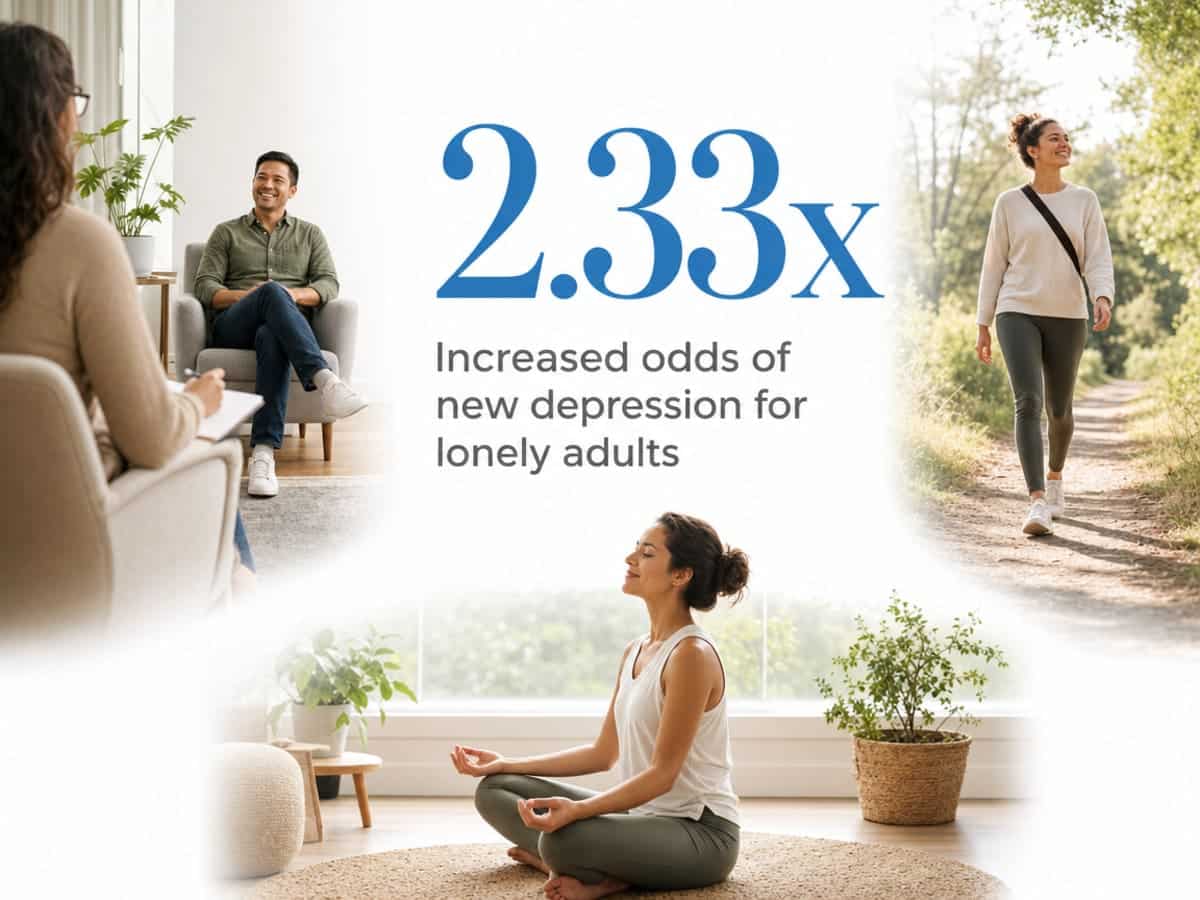
- Loneliness behaves like a modifiable clinical risk factor, with frequent loneliness linked to roughly 2.33 times the pooled adjusted odds of new-onset depression in adults 5.
- Low social support tends to precede loneliness, which then predicts recurrence and relapse, meaning each stage of the pathway is a place to intervene early 4.
- Not all connection protects: recovery-oriented ties, peer support, and hybrid clinical care build recovery capital, while substance-centered networks can raise relapse risk 1, 8.
The Disguises of High-Functioning Isolation
Isolation, when you’re a professional in recovery, rarely looks like a person hiding under a blanket. It looks like a full calendar. It looks like three unread messages from a friend you meant to call back last Tuesday, and it’s now Sunday, and you’ll respond tomorrow. Probably.
You’re not withdrawn. You’re just busy. Until you’re not.
Take stock of the last two weeks. How many times did you cancel a plan and tell yourself you’d reschedule? How many family calls did you screen because you didn’t have the energy to sound okay? How often did you pick telehealth over an in-person session because the drive felt like too much, even when you knew the room helped more? These aren’t small choices. They’re the specific shape isolation takes when your life is otherwise functional.
The disguise is convincing because it’s rewarded. Your employer sees output. Your bank account looks fine. You’re keeping your appointments, mostly. But recovery isn’t measured in productivity, and the research is clear that social isolation in people working through substance use predicts more psychological distress, earlier treatment dropout, and higher relapse risk 1.
Here’s what’s worth naming: the version of you that skips a group session because a deliverable is due is not lazy or weak. That version is tired. And tired, unchecked, becomes alone. And alone, unchecked, becomes something harder to walk back.
Notice the disguise. That’s the first move. You don’t have to fix anything today. You just have to see it.
Why Isolation Is a Clinical Threat, Not Just a Bad Feeling
Loneliness gets talked about like a mood. Something that passes if you push through the week. That framing lets it hide, and hiding is exactly the problem, because the research treats isolation as something closer to a modifiable risk factor than a passing feeling.
Here is the number that matters. In a meta-analysis of longitudinal studies in the general adult population, adults who reported being often lonely had roughly 2.33 times the pooled adjusted odds of developing new-onset depression compared with people who were rarely or never lonely 5. Not 33 percent higher. More than double. That figure comes from combined data across multiple studies of adults who did not have depression at the start, then were tracked over time.
Sit with that for a second. You are a person who has already navigated a mental health condition or substance use, or is supporting someone who has. Your baseline risk is not the same as the general population’s. If loneliness roughly doubles new depression risk in people starting from healthy, what do you think it does when your nervous system already knows the terrain?
None of this is meant to scare you. It is meant to give the feeling a name and a weight so you can respond to it the way you would respond to any other clinical signal, which is early, and without shame.
The Pathway: How Low Support Becomes Recurrence and Relapse
Isolation doesn’t drop a relapse on your doorstep overnight. It works through a pathway, and the pathway is worth understanding because each step is a place you can intervene.
A longitudinal study of older adults with major depressive disorder mapped it cleanly: lower social support at one point in time predicted higher loneliness later, and that loneliness in turn predicted an increase in recurrence of major depressive disorder 4. Support drops first. Loneliness rises second. Recurrence follows third. The population studied was older adults with MDD, so the exact effect sizes belong to that group, but the sequence itself is a mechanism worth borrowing, especially if you’re managing depression or anxiety alongside a substance use history.
Read that sequence as a set of doors, not a slide.
The first door is support. This is the practical stuff. Who checks in on you. Who knows what week you’re having. Whether you have a standing appointment with a therapist or psychiatrist you actually trust. When those thin out, and you don’t notice because your calendar is full, you’ve walked through the first door.
The second door is loneliness. This is the internal signal. You can be in a room of coworkers and feel it. You can be on a video call with your family and feel it. The research treats it as a distinct experience from being physically alone, which is why the older-adults study measured it separately from support and still found it predicted recurrence on its own 4. If you notice you’re lonely even when you’re technically surrounded, that’s information, not weakness.
The third door is recurrence. For depression, that’s the return of symptoms you thought were behind you. For substance use, it’s the pull toward something you’d committed to setting down. This is the door you don’t want to walk through, and it’s also the one you have the least control over once the first two are open.
The good news buried in the pathway: you get to intervene at any stage. Rebuilding support, whether that’s a counseling relationship, a peer group, or one honest conversation with a family member, can lower loneliness. Lower loneliness lowers recurrence risk. The doors work in the other direction too.
What Isolation Actually Costs at 12 Months
Numbers hit differently than warnings. So here is the 12-month picture the research draws when isolation is present at the start.
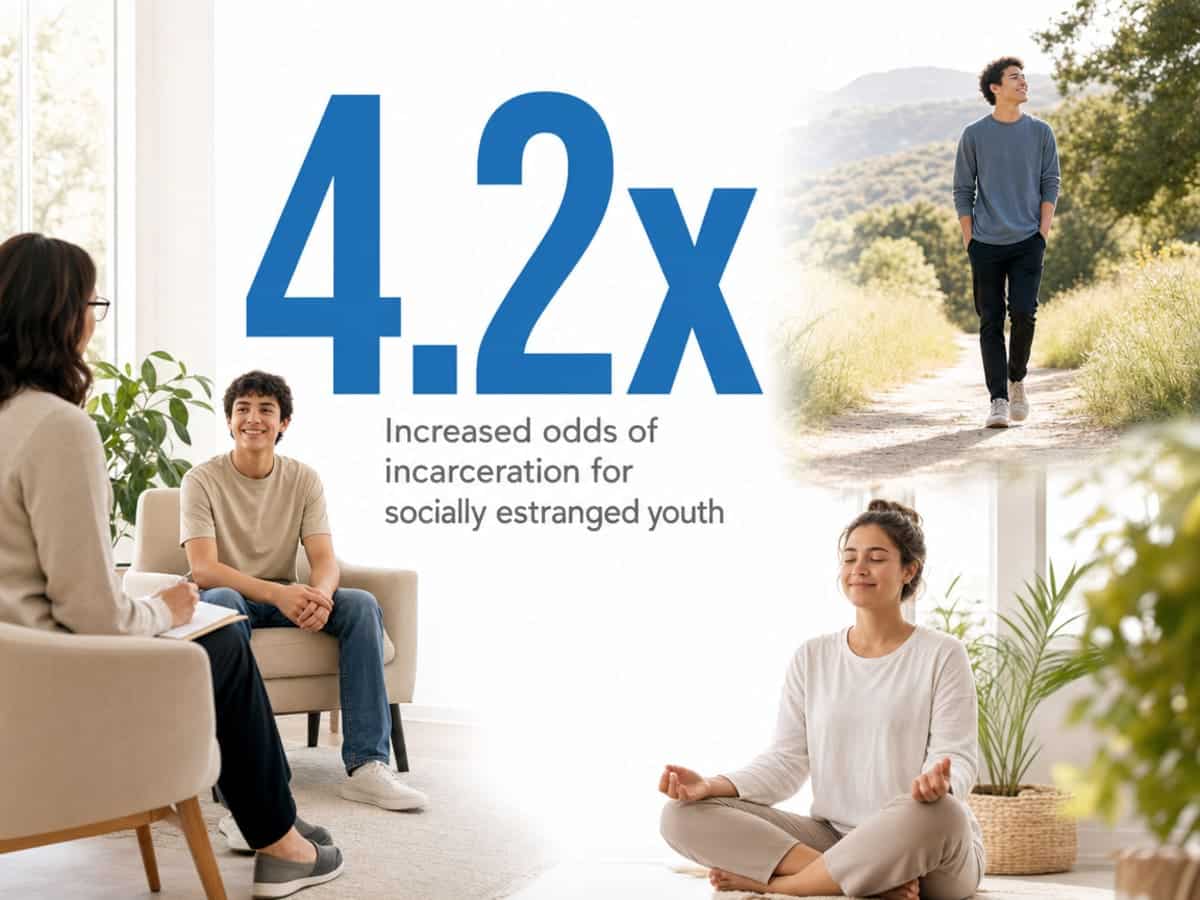
In a study of youth entering treatment for substance use, participants who arrived with social estrangement had:
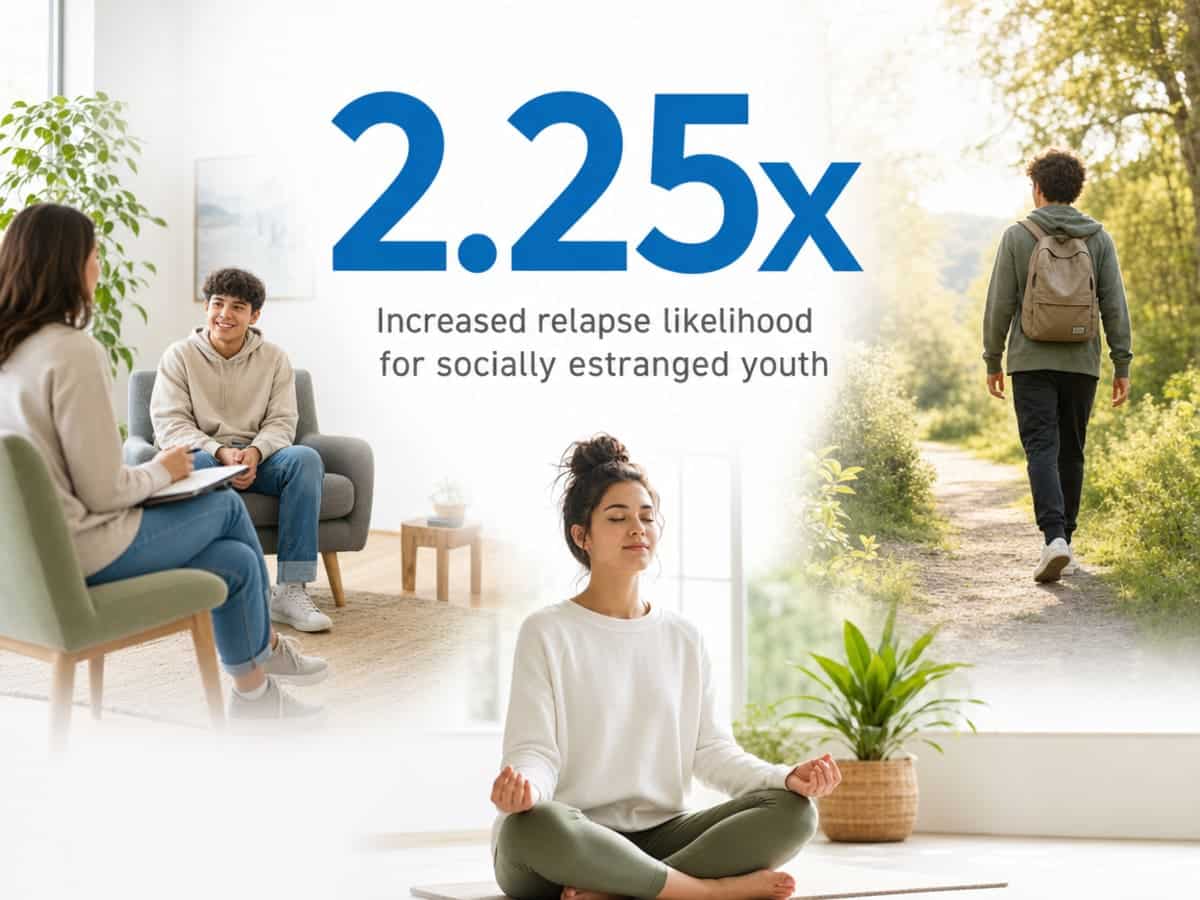
- 2.25 times the hazard of relapse within 12 months compared with peers who did not
- 4.2 times the odds of being incarcerated in that same year
- 5.27 times the odds of committing a violent crime in that same year 3
One year. One variable measured up front. Those three numbers changed.
Now the scope note, because this matters. That study looked at juveniles in a substance use treatment cohort, not working professionals in outpatient care. You cannot lift those exact multipliers onto your own life and call it a forecast. Your risk profile is different. Your resources, your therapeutic access, your baseline stability all shift the math.
What you can carry over is the shape of the finding. A single social variable, measured once, still predicted worse outcomes across three separate categories a full year later. That is what isolation does. It doesn’t just feel bad in the moment. It reshapes the odds on things you care about, over timelines long enough that you’d never trace them back to the group session you skipped last spring.
Translate the frame, not the numbers. Ask what your version of the 12-month picture looks like. In a year, do you want to be further into the career you’re building, more steady with the person you love, more honest with the people who know your history? Or do you want to be explaining, again, how the wheels came off during a quarter that looked fine from the outside?
Isolation is the variable you can move now that changes the answer later. It doesn’t require a dramatic intervention. It requires you to treat one conversation, one appointment, one honest check-in as clinical work, because that is what the evidence says it is.
Why Isolation Shows Up in the Chart Before the Crisis Does
By the time a recovery gets loud, it has usually been quiet for a while. Loneliness is one of the things clinicians see in the record long before an emergency visit or a mortality event, which is why some systems have started documenting it as a distinct data point rather than a side note.
A retrospective cohort study of patients receiving mental healthcare in South London looked at what happened after loneliness was recorded in the chart. Across the full cohort, documented loneliness was linked to a 1.17 times higher hazard of a subsequent crisis episode and a 1.30 times higher hazard of an emergency presentation. Among patients with substance misuse specifically, the association was sharper: a 1.68 times higher hazard of emergency presentation and a 1.29 times higher hazard of mortality 6.
Those numbers are not enormous compared with the multipliers from the youth study. They don’t need to be. The point is that loneliness, once written down, functioned as an early signal. It was visible in the chart before the crisis was visible in the ER, and the signal was strongest in the group that overlaps with the reader of this article: people managing substance use alongside other mental health concerns.
There is a caveat worth naming. Loneliness has to be asked about and documented to show up in records at all. The study authors point out that recorded loneliness likely undercounts what patients actually experience 6. If your clinician has never asked, that does not mean you are fine. It means the signal has not been captured yet.
What you can do with this: treat loneliness as something you name out loud in your next appointment, the way you would report a change in sleep or a shift in medication side effects. Not as a confession. As data. “I’ve been more isolated the last few weeks” is a clinical sentence, and it gives your therapist or psychiatrist something to work with while the doors from the earlier pathway are still open.
Not All Connection Protects You: Recovery-Supportive vs. Risk-Raising Networks
Here’s a nuance most recovery advice skips: connection itself isn’t the protective factor. The kind of connection is.
The research synthesis on social support in recovery populations makes this explicit. Networks that reinforce substance use can raise relapse risk, while recovery-oriented networks facilitate treatment engagement, abstinence, and longer-term recovery 1. Two people can both spend Friday night with friends and walk into Monday with entirely different odds. The math depends on who was in the room and what the room was for.
This matters for you specifically. High-functioning professional life is full of connection that looks healthy on paper and works against you in practice. The client dinner where three bottles get ordered before the entrees arrive. The industry conference that’s really a four-day drinking event with panels attached. The old college group chat that still routes every celebration through the same substance you’ve been trying to set down. None of those people are bad. The context isn’t recovery-supportive, and context is what your nervous system responds to.
A rough field guide, drawn from what the recovery literature calls supportive versus risk-raising ties 1:
Connection that tends to protect:
- People who know your history and don’t require you to perform around it.
- A therapist or psychiatrist you see on a real schedule, not just when something breaks.
- A peer group where other people are also doing the work.
- Family members who can hear “I had a hard week” without turning it into a crisis or a lecture.
- One or two friends who will meet you for coffee at 7 a.m. instead of drinks at 9 p.m.
Connection that tends to raise risk:
- Relationships organized around the substance or behavior you’re recovering from.
- People who get uncomfortable when you don’t participate the old way.
- Contact that only happens in high-cue environments.
- Group chats where the humor still runs on the thing you’re trying to leave behind.
- Networks where saying “I’m in recovery” would cost you standing.
You don’t have to burn any of it down. You do have to be honest about which column each relationship sits in, because your calendar is finite. Every hour you spend in the second column is an hour you’re not spending building the first.
Connection as Clinical Infrastructure: The Recovery Capital Frame
There’s a phrase in the recovery literature worth borrowing: recovery capital. It’s the sum of the resources you can draw on to stay well, including personal strengths, relationships, community ties, stable housing, meaningful work, and access to care. When researchers measure it, higher recovery capital tracks with better quality of life for people in recovery from substance use 8. Not tracks loosely. Tracks strongly enough that it shows up as a consistent finding.
The frame matters because it changes what connection is. Not a nice-to-have. Not something you get to after the real work of medication, therapy, and abstinence is stable. Connection is part of the real work, and it behaves like an asset you can accumulate or spend down.
The pandemic-era research on alcohol use disorder pushed this even further. During the first year of COVID-19, recovery capital acted as a distinctly protective factor against relapse, while perceived social support on its own did not independently predict outcomes 2. Read that carefully. Feeling supported was not enough. The broader stack of resources, the community ties, the recovery-oriented environments, the internal and external assets, was what buffered people when the world got harder.
For you, the practical translation is this. Treat your therapist, your psychiatrist, your peer group, your standing family dinner, and your one honest coworker the way you’d treat any other clinical resource. Track them. Protect them. Notice when your calendar starts eating them. That’s recovery capital, and it’s the infrastructure your long-term outcomes are built on.
Helping Others as a Protective Behavior
Most recovery advice puts you on the receiving end. Get more support. Ask for help. Lean on your people. That’s not wrong. It’s just incomplete.
The juvenile substance use study mentioned earlier found something that gets less airtime than the relapse numbers. Youth who gave help to others in Alcoholics Anonymous during treatment saw their risk of relapse drop (HR 0.74), along with lower odds of incarceration (OR 0.71) and violent crime (OR 0.62) in the following year 3. Same cohort, same 12 months. The direction of care flipped, and the outcomes moved with it.
Same scope note as before: this was a juvenile treatment cohort, not adult professionals. Don’t lift the exact numbers onto your life. Do borrow the finding underneath them. Being useful to someone else in recovery appears to protect the person doing the helping.
For you, that doesn’t mean sponsoring anyone this week. It can look small. Answering a text from someone earlier in the process than you. Showing up to the group session where a newer member needs to hear that year two is possible. Telling a colleague who’s quietly struggling that you’ve been there. Contribution is the version of connection you don’t have to receive to benefit from, and on a heavy week, that can be the easier door to open.
What Recovery-Oriented Connection Looks Like Inside a Working Life
You already know the abstract answer: build more connection. The harder question is what that looks like on a Tuesday when your first meeting starts at 8 and your last ends at 6:30, and you still owe your mom a call back.
Start by naming what you already have on the calendar as clinical time, not extra time. The standing therapy appointment is not a to-do. It’s the appointment that protects everything else. The psychiatry follow-up where you talk through medication is the same. When those show up on your calendar, they get the priority you’d give a board meeting, because the research on recovery capital is direct: the sum of your therapeutic, personal, and community resources tracks with quality of life and with staying well 8. That relationship is infrastructure, not overhead.
Then add one thing that doesn’t run through your job. This is where peer support matters. A structured peer group, whether it meets on Wednesday nights in a room or on a Sunday morning video call, gives you something your coworkers and clients can’t: contact with people who are also doing the work. The review evidence on peer support finds consistent improvements in hope, engagement, and empowerment for people using mental health services 9. You don’t have to be transformed by the group. You have to be in it.
Family and partner work counts too, and it counts more than most professionals give it credit for. One honest conversation a week with the person who lives with you, or the sibling who’s been trying to reach you, is recovery-oriented connection. Family counseling makes that conversation easier when the years have built up scar tissue.
The Honest Case for Hybrid Care
Telehealth is not a magic fix, and anyone selling it to you as one is skipping the part of the research that matters.
Here’s what the evidence actually says. Telepsychiatry is comparable in effectiveness to in-person care across a number of mental health conditions, and it can preserve continuity when geography, mobility, or a brutal work schedule would otherwise break the appointment chain 10. That’s the real case for virtual care, and it’s a strong one. When the alternative is missing sessions, a video visit that keeps you in the room with your clinician is protective.
The same review names the caveat honestly. The digital divide is real. Screen-only contact can, for some people, reinforce the isolation the care was supposed to counter 10. Video is a channel, not a substitute for physical presence in a room with other humans.
Hybrid care is the pragmatic answer, not a slogan. It means your psychiatry follow-ups can happen from your office between meetings when that’s what the week allows. It means your therapy alternates between in-person sessions, where the room does some of the work, and video visits, where the calendar does. It means group and peer components stay part of the picture, in whatever format you’ll actually attend.
Ask your care team directly: which parts of my treatment should stay in-person, which can move to video, and when should we revisit that mix? That question is clinical work. Answering it well is how connection gets built into a life that doesn’t slow down.
Break the Cycle of Isolation—Reach Out Now
Connect with real support and tools to help you stay on the path to lasting recovery.
Frequently Asked Questions
How do I know if I’m isolating or just busy?
Ask two questions. First, are you canceling on people who know your history, or only on optional plans? Second, when you’re around others, do you feel more connected or more alone? Isolation often hides inside a full calendar. If you’re consistently declining recovery-supportive contact and feeling lonely even in rooms full of people, that’s a signal worth naming with your clinician 4.
Is isolation really a relapse risk, or just uncomfortable?
It’s both, and the clinical part is well documented. Research on people in substance use recovery links social isolation and low support to more psychological distress, earlier treatment dropout, and higher relapse risk 1. Loneliness also shows up in mental health records as an early marker before crisis episodes and emergency visits 6. Treat it like any other clinical signal, not a mood you push through.
What counts as recovery-supportive connection versus regular socializing?
Recovery-supportive connection is contact that doesn’t require you to perform around your history and doesn’t run through the substance you’re setting down. Therapy, peer groups, honest family conversations, and one or two friends who meet you outside high-cue settings count. The recovery literature is direct that networks tied to substance use can raise relapse risk, while recovery-oriented ties support engagement and abstinence 1. Context decides.
Can telehealth alone give me the connection I need?
For some weeks, yes. Long term, probably not on its own. Telepsychiatry is comparable in effectiveness to in-person care and preserves continuity when your schedule or geography would otherwise break the chain 10. The same review flags the digital divide and warns that screen-only contact can reinforce isolation for some people 10. A hybrid mix, in-person for some visits and video for others, tends to work better than either alone.
I’m in recovery and support a partner too. Where do I start if I’ve drifted?
Start with one appointment you don’t move and one honest conversation you don’t script. Rebuild the therapeutic relationship first, because recovery capital, the stack of personal and interpersonal resources, tracks with quality of life and buffers relapse risk during hard stretches 2, 8. Then add couples or family counseling if the years have built scar tissue. You don’t have to fix everything this month. You have to reopen the doors.
Does helping someone else actually protect my own recovery?
The evidence points that way. In a juvenile substance use treatment cohort, giving help to others in Alcoholics Anonymous during treatment was linked to lower relapse risk and better 12-month outcomes for the person doing the helping 3. That specific cohort was youth, not adult professionals, so don’t lift the numbers directly. Do borrow the finding: contribution, mentorship, or simply showing up for someone earlier in the process appears to protect you too.
References
- The Importance of Social Support in Recovery Populations. https://pmc.ncbi.nlm.nih.gov/articles/PMC10259869/
- Social Connection and Recovery from Alcohol Use Disorder. https://www.public-health.uiowa.edu/wp-content/uploads/2015/07/RSA-Extended-Abstract-2022.pdf
- Alone on the Inside: The Impact of Social Isolation and Helping Others on Juvenile Substance Use. https://pmc.ncbi.nlm.nih.gov/articles/PMC5889144/
- The effect of loneliness and social support on the course of major depressive disorder in older adults: a longitudinal study. https://pubmed.ncbi.nlm.nih.gov/35029840/
- Loneliness and the onset of new mental health problems in the general population: a systematic review and meta-analysis. https://pmc.ncbi.nlm.nih.gov/articles/PMC9636084/
- Associations between recorded loneliness and adverse mental health outcomes among patients receiving mental healthcare in South London: a retrospective cohort study. https://pubmed.ncbi.nlm.nih.gov/38622311/
- Loneliness and subsequent depression and anxiety in emerging adulthood. https://pubmed.ncbi.nlm.nih.gov/41508408/
- Recovery Capital and Quality of Life in Addiction Recovery. https://www.ncbi.nlm.nih.gov/pmc/articles/PMC6699792/
- Peer Support in Mental Health: Evidence for Effectiveness. https://www.ncbi.nlm.nih.gov/pmc/articles/PMC5470351/
- Telepsychiatry and the Digital Divide in Mental Health. https://www.ncbi.nlm.nih.gov/pmc/articles/PMC7151433/