

Key Takeaways
- Suicide risk in college clusters around transitions and pressure points—freshman weeks, midterms, finals, breakups—not personality types, so watch the calendar and increase contact during those stretches.
- Anxiety belongs alongside sadness as a warning sign; screening for depression alone catches 23% of ideation, while adding anxiety raises detection to 35% 8.
- In the first ten minutes, ask directly about suicide, listen without fixing, stay present, remove access to lethal means, and call 988 together 5.
- Crisis lines keep someone alive tonight, but ongoing weekly therapy is what carries the second wave—about a quarter of students with ideation experience more than one episode 7.
If you’re reading this because you’re worried right now
Take a breath. If you opened this page because you’re scared for yourself, or because someone you love isn’t okay, you’re already doing something that matters. Reading this counts.
Here’s what you need first, before anything else on this page:
The rest of this article is a plainspoken guide for the moments after that first call, and for the slower, quieter worries that don’t feel like a crisis but still keep you up at night. You’ll learn what to watch for, what to actually say when you’re scared to ask the hard question, and how to get real ongoing care, even when your student lives three states away or the campus counseling center can’t see them for six weeks.
You don’t have to figure this out alone. Keep going.
How common is this, really
If you feel like you’re the only one carrying this weight, you’re not. And the numbers, while heavy to read, exist for a reason: so you know this isn’t rare, and so you know reaching out isn’t an overreaction.
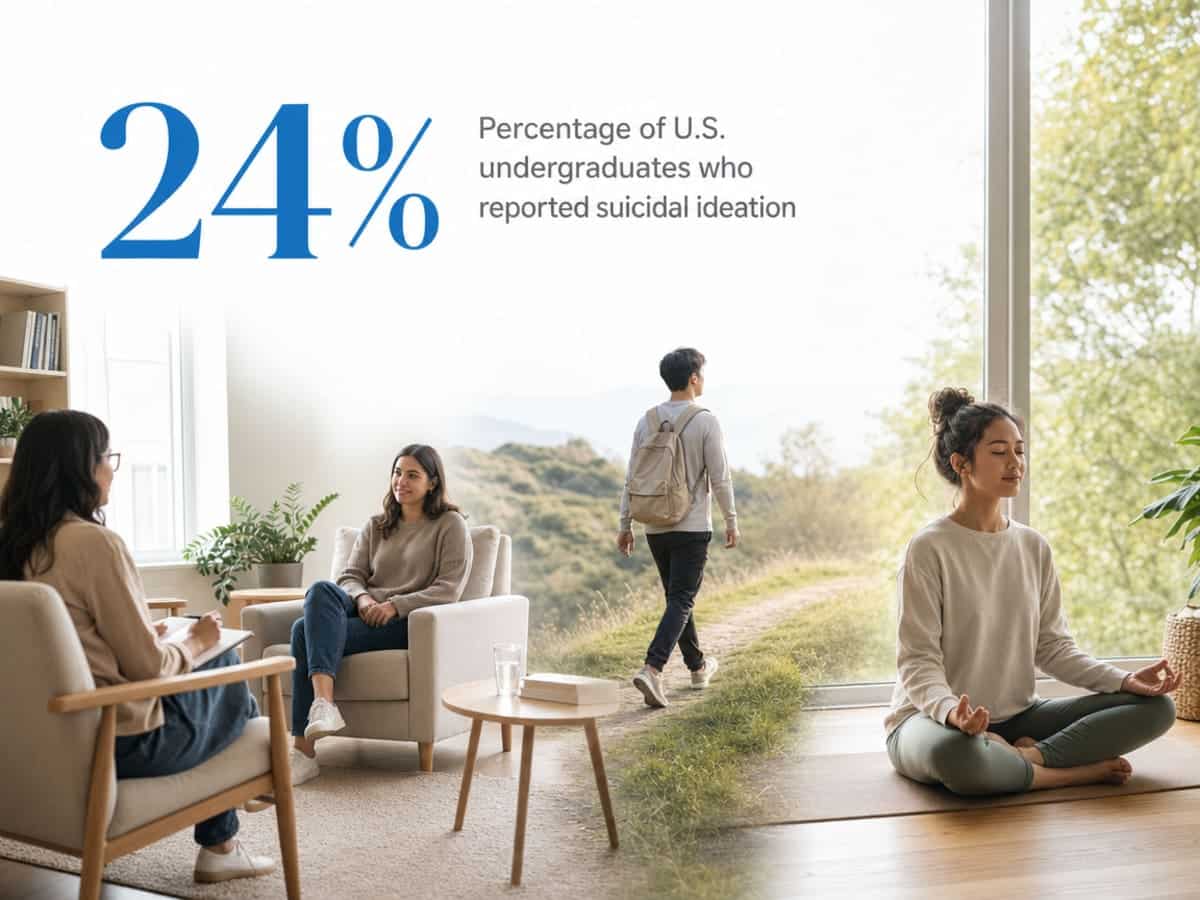
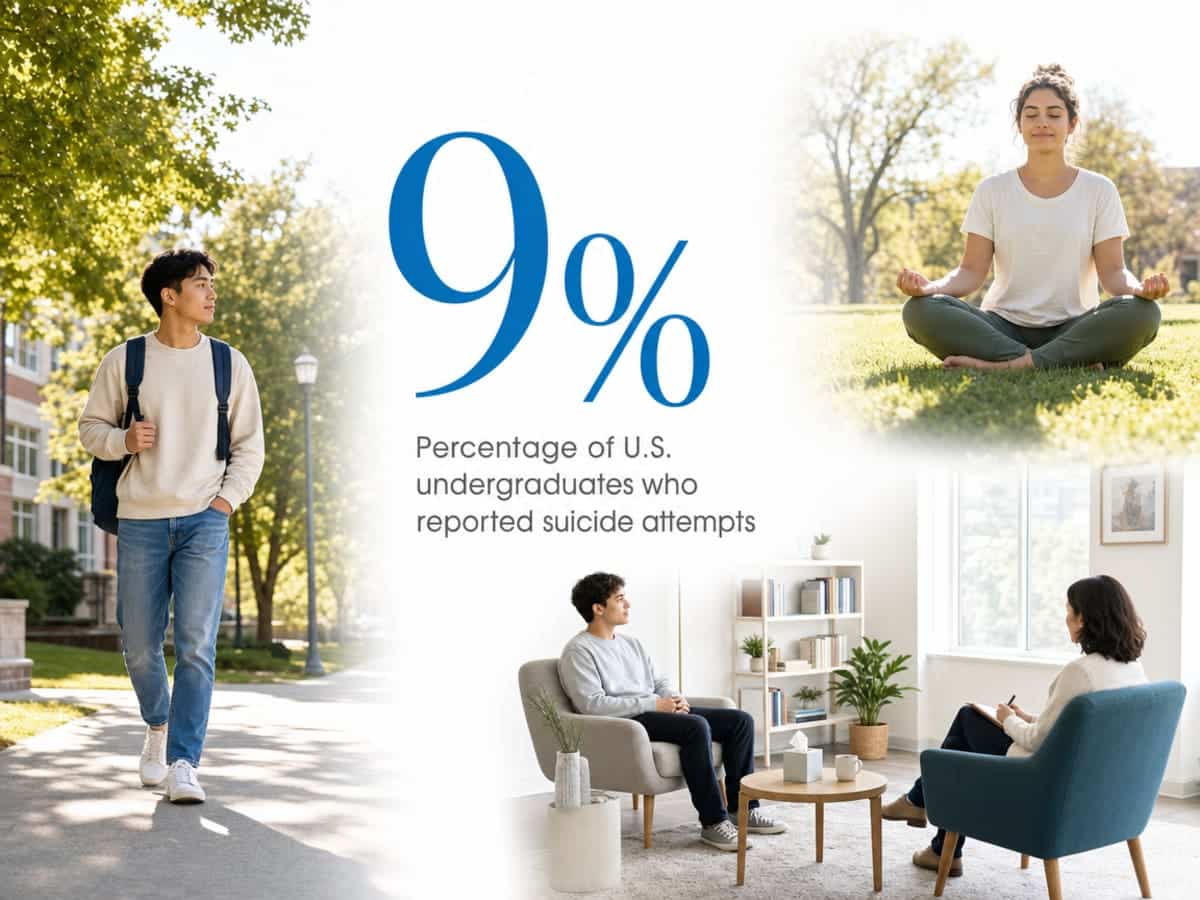
The largest recent look at this comes from the Spring 2015 ACHA-NCHA survey, which asked 67,308 undergraduates at 108 U.S. institutions about their mental health. Roughly one in four students—about 24%—said they had seriously thought about suicide at some point. Around 9% reported a suicide attempt, and nearly 20% reported self-injury 4. That’s not a small subset of struggling students in a corner of campus. That’s a quarter of the lecture hall, the dorm floor, the group chat.
Here’s what the gap between those two numbers tells you: a lot of people who think about suicide never act on those thoughts. Thinking about it does not mean someone is on a countdown clock. But it does mean something is hurting, and that pain deserves attention before it grows. If you’re the one thinking about it, please hear this—you are part of a much larger group of people who felt the same way and are still here.
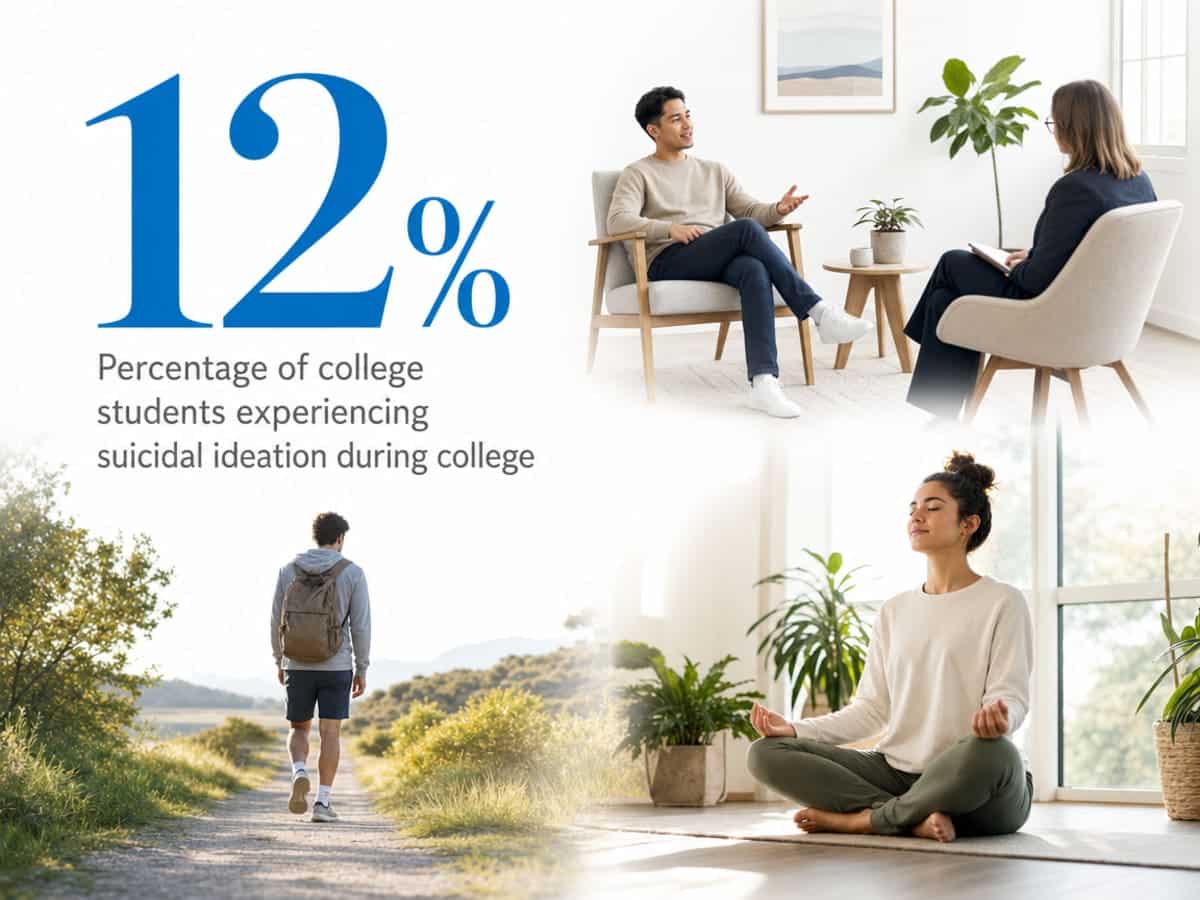
A longitudinal study that followed students across their college years found that about 12% experienced suicidal ideation at some point during school, and roughly a quarter of those students had more than one episode 7. That last piece matters. Thoughts that pass once can come back during the next hard week, the next breakup, the next round of finals. It’s why a single crisis call, while it can save a life in a moment, is rarely the whole story. Ongoing care is what carries you—or the person you love—through the second wave, and the one after that.
The moments when risk climbs: transitions, not personalities
One of the most useful things to understand about college suicide risk is that it isn’t really about who a student is. It’s about when. Risk clusters around specific stretches of the calendar, and knowing them helps you watch closer during the weeks that matter most.
The first six weeks of freshman year is one of those stretches. A student who was the center of a tight friend group in high school is suddenly eating alone in a dining hall. The routines that held their week together—family dinners, a bedroom door they could close, a coach who noticed when they were off—are gone. Transfer students hit a version of this too, arriving into friend groups that already formed without them. Anxiety that a student managed quietly at home can spike when the scaffolding disappears, and researchers consistently point to transitional periods, limited social supports, and high negative affect as conditions where risk climbs 8.
Then come the pressure points inside the semester. Midterms. Finals. The week grades post. A breakup in a small dorm where you can’t avoid running into your ex. Coming back from winter break into a spring semester that feels heavier than the fall did. Stress at even moderate levels has been linked to diagnosable mental health conditions and suicide attempts in college populations, which means you don’t have to wait for a full breakdown to take a hard week seriously 4.
What pulls a student through these stretches isn’t usually toughness. It’s connection and coping. A multivariate study of college ideation found that low social support and poor emotion regulation predicted suicidal thoughts even in students with only mild depressive symptoms 10. That’s important. It means a student can look mostly okay on paper—decent grades, no obvious diagnosis—and still be quietly at risk because they feel alone or because they don’t have a reliable way to bring their nervous system down after a bad night.
So if you’re a parent, mark the calendar. Text more during the first six weeks, during finals, during the days after a breakup you heard about. If you’re the student, notice which weeks feel like they have teeth. Those are the weeks to double down on the small things that keep you tethered—one meal with someone, one walk, one message sent to a friend or a therapist. It’s not weakness to need more support in a harder week. It’s math.
Warning signs that go beyond sadness
Anxiety is a warning sign, not a side note
Most of us were taught to watch for sadness. Flat affect. Crying. Withdrawal. And those signs matter. But if you’re only scanning for a student who looks depressed in the way movies show depression, you’ll miss a lot of the students who are actually at risk.
Anxiety belongs on the same list. When researchers looked at how well different screening questions catch suicidal thinking in college students, they found that screening for depression alone identified about 23% of suicidal ideation. Add anxiety screening, and detection jumped to 35%. One specific symptom—”feeling afraid something awful might happen”—doubled the odds of ideation on its own 8. That’s a big miss rate to close with one extra question.
What this looks like in real life: a student who isn’t crying, isn’t isolating on the surface, but is up at 3 a.m. with a racing heart, convinced something terrible is about to happen. A friend who seems keyed up all the time, checking their phone, apologizing for things that aren’t their fault, unable to sit still. The chest tightness before a class they used to love. The stomach that won’t hold food during exam week. A dread that has no shape.
Anxiety at that pitch is exhausting. It wears down sleep, appetite, and the ability to reach out. And when a nervous system runs at that level for weeks, thoughts of “I can’t do this anymore” can start to feel less like a symptom and more like a solution. That’s the door researchers are pointing at when they say transitions, thin social support, and high negative emotion combine to raise risk 8.
If you feel more anxious than sad, that counts. If someone you love is spinning instead of sinking, that counts too. Ask the question anyway.
Behavior shifts a roommate or parent can actually see
You don’t need a clinical eye to notice the changes that matter. You need to know the person’s baseline, and you need permission to trust it when something feels off.
Watch for shifts, not absolutes. A student who used to send memes at midnight has gone quiet for a week. Sleep flips—up until 4 a.m., then sleeping through afternoon classes. Meals get skipped or become the same beige carbs on repeat. Grades slide in a class they used to love, or a perfectionist suddenly stops caring about anything. Drinking picks up, or a light social user starts drinking alone. Multivariate research on college ideation points to low social support, poor emotion regulation, and alcohol use as independent contributors to risk—each one worth naming when you see it 10.
There are also quieter tells. Giving away things they cared about. A strange calm after weeks of visible distress. Language that drifts toward “you’ll be fine without me,” “I’m just tired of being here,” or “nothing matters.” A search history a roommate glimpses. A goodbye that lands weirder than it should.
If you’re a parent tracking this from a distance, you have less visual data—so lean on rhythm. When did they last text back? When did their voice on the phone last sound like theirs? If your gut says something changed, that’s information. You don’t need proof to check in. You just need to pick up the phone.
The first ten minutes: what to say when you’re scared to ask
The scariest part is usually the beginning. You’ve noticed something. Your stomach knows. And now you’re standing in a hallway, or holding a phone, running the words in your head and deleting all of them. Here’s the truth that makes the next ten minutes possible: you don’t have to say it perfectly. You just have to say it.
Ask directly. Not “are you okay,” which is easy to bat away. Ask, “Are you thinking about suicide?” or “Are you thinking about killing yourself?” SAMHSA is explicit on this point—asking someone directly about suicide does not plant the idea and does not make an attempt more likely 5. It does the opposite. It tells the person that this thing they’ve been carrying alone is something you can hear. Most people who are thinking about suicide feel relief when someone finally names it out loud.
Listen without fixing. This is the hardest part for people who love them. You will want to argue with the pain—remind them of their scholarship, their little sister, the trip you planned. Don’t. Not yet. Say, “Tell me what’s going on,” and then let there be silence. Nod. Reflect back what you hear. “That sounds unbearable.” “I’m glad you’re telling me.” You are not trying to talk them out of anything. You are trying to make them feel less alone in the room.
Stay present. Do not leave them, and do not hand them off to a text thread and hope for the best. If you’re on the phone, stay on the phone. If you’re in person, stay in person. Physical presence is a form of medicine that no app can replace 5.
Remove access to means. This one feels awkward and it’s non-negotiable. If there’s a firearm in the room, in the apartment, in the car—get it out, or get them out. Lock up medications. Hand a roommate the pills. The research on this is unglamorous and clear: putting time and distance between a person and a lethal method saves lives 5.
Call or text 988. You can do this together. “I want to call this line with you. We can put it on speaker.” 988 is the Suicide and Crisis Lifeline. A trained counselor will help you both figure out what happens next—whether that’s staying home with a safety plan, going to the ER, or getting connected to care in the morning 5.
Connect to ongoing care. A crisis call is a bridge, not a destination. Before you leave the moment, put something on the calendar—a therapist appointment, a call to the campus counseling center, a telehealth intake. Something with a date on it. We’ll talk about what that care actually looks like in a minute.
You will not get every step right. That’s okay. Showing up imperfectly beats not showing up.
Crisis response vs. ongoing care: don’t confuse them
These two things get talked about like they’re the same thing. They’re not, and mixing them up is one of the most common ways families and students end up disappointed by the mental health system.
- Crisis response
What you reach for in the moment. 988. A campus safety line. The emergency room. A crisis text. Its job is narrow and specific: keep someone alive tonight. A counselor on 988 can help de-escalate, help you build a safety plan for the next 24 to 48 hours, and help you decide whether an ER visit is needed 5. That’s it. That’s the whole assignment, and it’s a big one.
- Ongoing care
What carries the weeks and months after. A therapist you see every week or two. A psychiatrist who manages medication if that’s part of the picture. Group sessions. A standing appointment on a Thursday at 4 p.m. that becomes something your nervous system starts to lean on.
Here’s why the distinction matters: a student who calls 988, gets through the night, and doesn’t have anything scheduled by Monday is often back in the same place by the following weekend. The crisis line did its job. The follow-through is on you and the people helping you. Before you close out any crisis moment, put a real appointment on the calendar—not a phone number to try later.
Getting connected to real care when campus counseling has a waitlist
What the campus can actually do (and what to ask for)
Campus counseling centers do more than most students realize, and less than most families hope. Knowing the difference before you call saves a week of frustration.
Most centers offer a short-term therapy model—usually a handful of sessions per academic year—plus crisis walk-in hours, referrals to community providers, and a case manager who can help with academic accommodations if a student needs to reduce a course load or take a medical leave. Many campuses also run gatekeeper trainings for RAs, faculty, and peer leaders, and some are part of SAMHSA-funded prevention programs that fold in screening, outreach, and postvention after a loss 1, 2.
When you call, ask specifically:
- Do you offer same-week crisis appointments?
- Is there a 24/7 counselor-on-call line for after hours?
- Can you help coordinate a referral to a longer-term provider if the waitlist is more than two weeks?
- Will you communicate with an outside therapist or psychiatrist if a student signs a release?
- Is there a case manager who can help with academic accommodations?
If the answer to the crisis question is no, or the waitlist stretches past a couple of weeks, don’t wait it out. Use campus for what it does well—crisis coverage, academic support, referrals—and get ongoing therapy started somewhere else in parallel.
Telehealth when the student lives away from home
Here is the practical problem a lot of families run into. Your student goes to school in Tennessee. Their therapist from high school is in Texas. Winter break hits and everyone assumes the old therapist will pick back up—except the therapist is only licensed in one state, and the student is only home for three weeks. Care fractures right at the moment it needs to be steady.
Telehealth solves part of this, but only when it’s built around how students actually live. Research on college students’ perceptions of telemental health found that comfort, privacy, and trust are the real barriers to virtual care, and that offering a menu—including hybrid in-person and telehealth options—matters more than any single delivery format 9. A student in a shared dorm may not want to do a session from their bed with a roommate ten feet away. A student who commutes may prefer a video visit between classes over a drive across town. Neither is wrong. Both need options.
What to look for in a telehealth provider:
- Licensure in the state where the student actually is, not just where the family lives
- The ability to schedule evenings and weekends around a class calendar
- Integrated psychiatry so medication management doesn’t require a second provider in a third state
- A real crisis protocol for when a session surfaces something urgent
Mind Body Optimization offers HIPAA-compliant telehealth psychiatry and counseling across Texas, Tennessee, Oklahoma, and Missouri, which means a student attending school in one of those states can keep the same clinician when they’re on campus, home for break, or moved to a summer internship within that footprint. It’s not a fit for every student. But if geography is the reason care keeps breaking, this is one of the practical ways to make it hold.
Ideation often returns: why ongoing care matters more than a single call
Here’s the part nobody warns you about. A student gets through a bad night. Someone stays with them, 988 helps them build a plan, morning comes, and everyone exhales. Two months later, in the middle of a spring semester that looked totally fine on the surface, the thoughts come back.
That pattern isn’t rare, and it isn’t a failure. Of the roughly 12% of college students who experience suicidal ideation during school, about a quarter go through more than one episode 7. So if you’ve been the person who kept someone alive through one hard night—or you’re the one who lived through it—it helps to know that a second wave isn’t a sign that the first help didn’t work. It’s how this often moves.
Which is why the goal after a crisis isn’t just relief. It’s structure. A weekly therapist. A psychiatrist appointment if medication is part of the picture. Someone who already knows the backstory when the next hard week arrives, so a student doesn’t have to explain everything from scratch at 2 a.m. Historical NCHA data found that fewer than 20% of students with suicidal thoughts or attempts were actually in treatment 6. The gap between needing care and having care is where second episodes live.
If you’re building that structure now, you’re doing the quiet, unshowy work that matters most. Keep going.
Building the protective side: connection, sleep, and small wins
Prevention isn’t just about spotting a crisis coming. It’s about what you build on the ordinary Tuesdays, so the hard weeks have something to land on.
Start with connection, because the research keeps pointing back to it. Low social support predicts suicidal ideation in college students even when depression is mild 10. That means the fix isn’t waiting until you feel bad enough to earn help. It’s one standing coffee with a friend. One phone call home on Sunday. One text back to the person who reached out last week. If you’re the parent, be the boring one who calls on the same day every week—predictable contact matters more than a perfect conversation.
Sleep is the other quiet lever. When sleep breaks down, emotion regulation breaks down with it, and poor emotion regulation is one of the independent predictors of ideation in college students 10. You don’t have to fix sleep perfectly. Aim for a wake time that stays roughly the same, even on weekends. Put the phone across the room. That’s it. Start there.
Small wins count. Making one appointment. Sending one text. Going to one class you wanted to skip. You’re not behind. You’re building.
Find support for stress when college feels overwhelming
Connect with someone who understands and can help you move forward, even when things feel heavy.
Frequently Asked Questions
Will asking someone directly if they’re thinking about suicide make it more likely they’ll act on it?
No. This is one of the most common fears, and the evidence points the other way. SAMHSA’s guidance is direct: asking someone if they are thinking about killing themselves does not put the idea in their head or make an attempt more likely 5. For most people carrying these thoughts alone, a direct question brings relief. It signals you can handle the answer.
What’s the difference between calling 988 and going to the ER?
988 is a phone and text line for de-escalation, safety planning, and figuring out what comes next 5. The ER is for immediate medical danger—an attempt in progress, a serious injury, or a situation where staying home isn’t safe tonight. Start with 988 when you’re unsure. The counselor can help you decide whether an ER visit is the right call.
My college’s counseling center has a weeks-long waitlist. What can I do in the meantime?
Ask the center specifically about crisis walk-in hours, an after-hours counselor line, and referrals to outside providers—these often move faster than the general waitlist 1. Then start ongoing therapy in parallel through an outpatient provider or telehealth service licensed in your state. Don’t wait for the campus slot to open. Use campus for crisis support and academic accommodations, and build the rest outside.
Can my student keep seeing a therapist if they go to school in a different state?
Only if the therapist is licensed in the state where your student physically is during sessions. That’s the rule that trips most families up at winter break. Providers with multi-state licensure—like Mind Body Optimization’s telehealth footprint across Texas, Tennessee, Oklahoma, and Missouri—can keep the same clinician through campus, home visits, and summer moves within that footprint 9. Ask about state licensure before you commit.
My friend seems more anxious than sad. Should I still be worried about suicide risk?
Yes. Screening only for depression catches about 23% of suicidal ideation in college students. Add anxiety screening, and detection climbs to 35%—and the symptom “feeling afraid something awful might happen” alone doubles the odds of ideation 8. If your friend is spinning, sleepless, and dread-filled instead of visibly sad, that pattern counts. Ask the direct question anyway.
If someone had suicidal thoughts once and got through it, are they safe now?
Getting through one episode is a real win, and it doesn’t mean the risk is behind them. Among college students who experience suicidal ideation, roughly a quarter go through more than one episode 7. A second wave isn’t a sign the first help failed—it’s how this often moves. That’s why ongoing therapy after a crisis matters more than a single call. Structure protects.
References
- SAMHSA’s Suicide Prevention Initiatives. https://www.samhsa.gov/mental-health/suicidal-behavior/prevention-initiatives
- Prevention and Treatment of Anxiety, Depression, and Suicidal Thoughts and Behaviors Among College Students (SAMHSA Publication No. PEP21-06-05-002). https://archive.hshsl.umaryland.edu/entities/publication/45aff574-2915-4cd1-8a73-914144a3f067
- Suicide Risks Among U.S. College Students: a Time-Series Cross …. https://pmc.ncbi.nlm.nih.gov/articles/PMC12804210/
- Mental health diagnoses and suicidality among college students: Associations with stress. https://pmc.ncbi.nlm.nih.gov/articles/PMC6628691/
- Suicide Prevention. https://www.samhsa.gov/mental-health/suicidal-behavior/prevention
- Aspects of suicidal behavior, depression, and treatment in college students: results from the National College Health Assessment Survey. https://pubmed.ncbi.nlm.nih.gov/15843320/
- Prevalence and predictors of persistent suicide ideation, plans, and attempts during college. https://pmc.ncbi.nlm.nih.gov/articles/PMC2924459/
- Anxiety and suicidality in the college student population. https://pmc.ncbi.nlm.nih.gov/articles/PMC9568619/
- College students’ perceptions of telemental health to address their mental health needs. https://pubmed.ncbi.nlm.nih.gov/35271419/
- Suicide ideation among college students: A multivariate analysis. https://pmc.ncbi.nlm.nih.gov/articles/PMC2709750/
- Relations Between Proximal and Distal Predictors of Suicide Risk among College Students. https://pubmed.ncbi.nlm.nih.gov/40995455/