

Key Takeaways
- National Recovery Month, observed every September since 1989 and coordinated by SAMHSA, promotes evidence-based treatment and honors people in recovery alongside the clinicians supporting them.1
- SAMHSA’s 2026 theme, Recovery Happens Together, frames recovery as a whole-person process spanning mind, body, relationships, purpose, and community rather than a single prescribed pathway.3
- Hope functions as a measurable clinical variable built through agency and pathways, predicting later-stage abstinence and partially mediating the link between recovery progress and lower relapse risk.10,12
- Integrated outpatient care with one intake, a shared chart, coordinated psychiatry and counseling, and telehealth options across Texas, Tennessee, Oklahoma, and Kansas City makes sustained recovery workable for demanding schedules.
What September Actually Marks
Every September, National Recovery Month, a federal observance organized by the Substance Abuse and Mental Health Services Administration (SAMHSA), highlights evidence-based treatment, celebrates individuals in recovery, and acknowledges the professionals and community groups who support this journey.1
This observance underscores that recovery is a measurable clinical outcome, not merely a personal trait, and that hope is a concept actively studied by the research community. This article explores the significance of September’s observance, the current SAMHSA theme, and how integrated outpatient care across Texas, Tennessee, Oklahoma, and the Kansas City service area makes these concepts accessible through practical appointments.
The 36-Year Backstory of Recovery Month
From 1989 to SAMHSA’s Office of Recovery
Recovery Month began in 1989, initially focusing on treatment providers and their clients. Observed annually in September and managed by SAMHSA, its core mission has remained consistent: to promote evidence-based treatment, honor those in recovery, and thank the clinicians and community workers who facilitate it.1
Over 35 years, the campaign’s scope has broadened significantly. It now actively works to counteract the stigma that often prevents individuals from seeking help and emphasizes that recovery is achievable for anyone, not just a select few. This expansion is structurally reflected in SAMHSA’s establishment of its first Office of Recovery, dedicated to coordinating recovery-related policy, funding, and technical assistance across the agency. This institutional commitment ensures that recovery is a central, budgeted, and continuously supported initiative within the federal behavioral health system.2
This Year’s Framing: Recovery Happens Together
SAMHSA’s current theme, “Recovery Happens Together,” emphasizes a holistic approach. Its weekly focus areas include healing and wellbeing, the role of youth and family in recovery, and the recognition of multiple pathways to recovery, acknowledging that there isn’t a single prescribed method.3
This framework defines recovery as a process that supports the entire person, encompassing mind, body, relationships, purpose, and community. For working adults considering therapy, medication adjustments, or addressing substance use, this comprehensive view integrates professional life, personal relationships, and sense of purpose as integral components of recovery, rather than mere distractions. SAMHSA also advocates for a shift from chemical coping to human connection, promoting a “purpose culture” over a “pill culture”. This perspective does not dismiss medication but rather highlights its enhanced effectiveness when integrated within a supportive life context.3,4
Why Federal Funding Matters to Working Adults
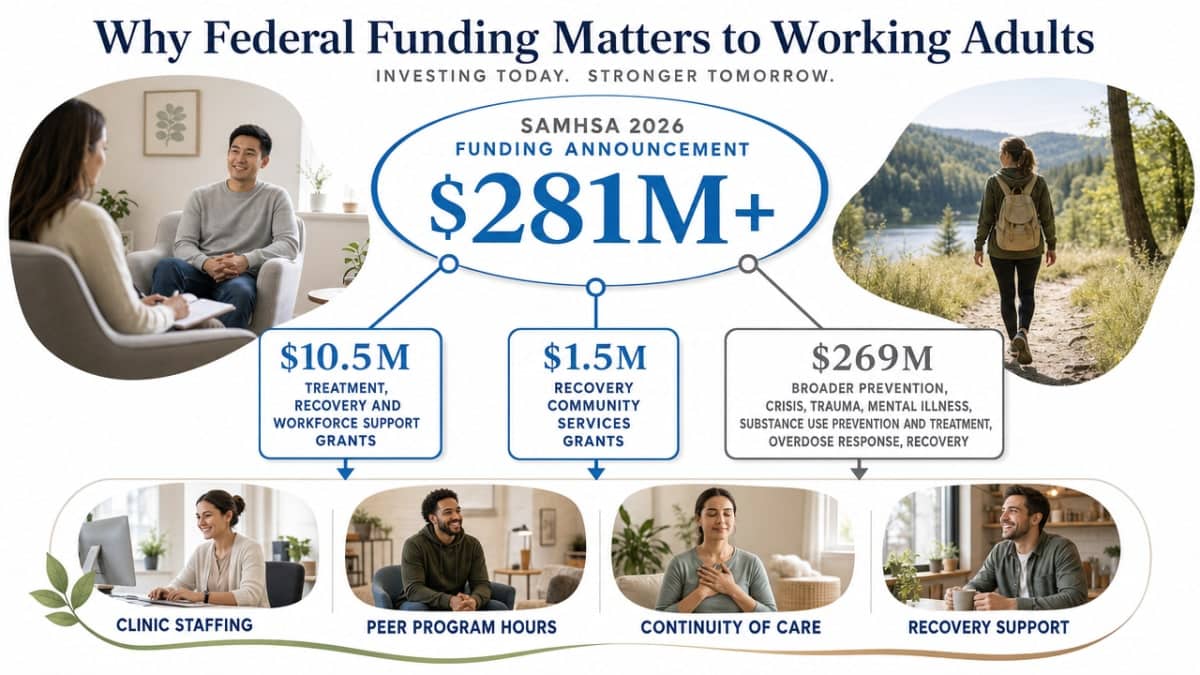
Federal funding decisions by SAMHSA directly impact the availability and quality of local behavioral health services. These funds determine staffing levels at clinics, the operational hours of peer programs, and the continuity of care with trusted counselors.
In 2026, SAMHSA allocated over $281 million to various programs, including those addressing trauma, mental illness, substance use prevention and treatment, overdose response, and recovery. Of particular relevance to outpatient care for working adults are two specific allocations:
- $10.5 million for Treatment, Recovery and Workforce Support grants
- $1.5 million for Recovery Community Services grants
These funds expand access to recovery support for individuals with substance use disorders and co-occurring conditions. The remaining $269 million supports broader prevention, crisis response, and system-level programs.9
The Treatment, Recovery and Workforce Support grants help clinics hire and retain clinicians who accept insurance and are accessible. Recovery Community Services grants fund peer-led groups, helplines, and community organizations that provide crucial support outside of traditional therapy sessions. This federal investment demonstrates a commitment to integrated outpatient and community support, designed to meet the needs of individuals with demanding schedules. While initiating care may still present challenges, the underlying infrastructure is being developed with such individuals in mind.
Hope as a Clinical Variable, Not a Slogan
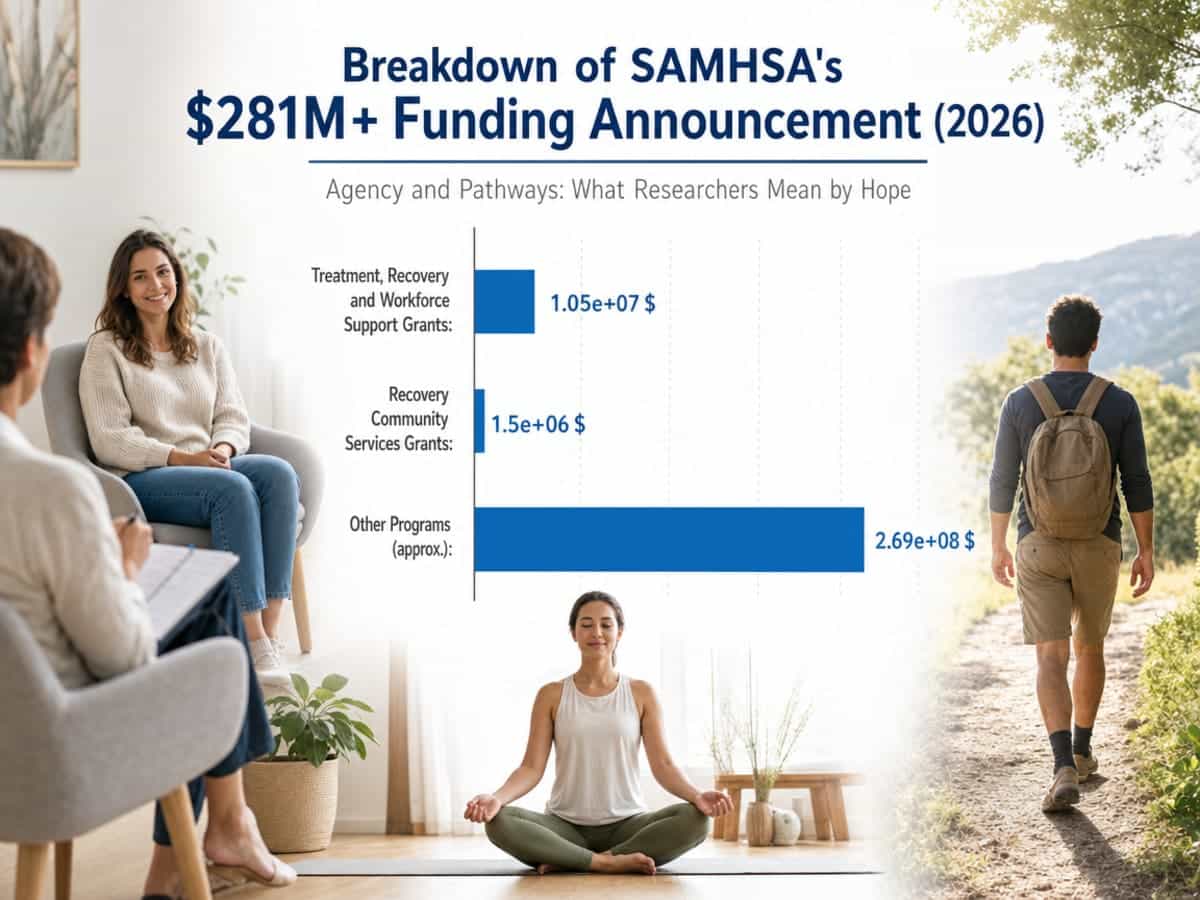
Agency and Pathways: What Researchers Mean by Hope
In recovery literature, hope is precisely defined with two key components:
- Agency:
- the belief in one’s ability to pursue a goal
- Pathways:
- the capacity to identify alternative routes when initial plans falter
This distinction is crucial because it transforms hope into a construct that can be actively developed.
Agency is strengthened through successful small actions, such as attending an appointment, engaging honestly during intake, or adhering to a prescription. Pathways are expanded by having multiple options for challenging moments, like access to a therapist, potential medication adjustments, or support from a peer with lived experience. A study involving residents in a communal-living recovery program found that higher levels of hope predicted substance abstinence in later stages of recovery, particularly for drug use. This suggests that the skills cultivated through hope are vital for sustaining recovery beyond its initial phases.10
How Hope Mediates the Path Away from Relapse
Recovery progress is rarely linear. A 2020 study in Substance Use & Misuse investigated the relationship between recovery progress and relapse risk, revealing a significant inverse correlation: increased recovery progress led to decreased relapse risk. Notably, hope partially mediated this effect, indicating that a substantial portion of this protection stemmed from how progress enhanced an individual’s sense of agency and available pathways.12
This research highlights the profound value of consistent effort in recovery. Each kept appointment, adherence to medication, or difficult conversation contributes to building an internal conviction that recovery is achievable. This conviction, in turn, helps maintain stability during challenging periods, such as work-related stress, grief, or difficult personal days.
Hope When Anxiety and Depression Sit Alongside Substance Use
For individuals managing substance use alongside anxiety or depression, these conditions often exacerbate each other. Periods of heightened anxiety can trigger a return to coping mechanisms, while low mood can undermine motivation for treatment. In this context, hope becomes a tangible resource.
Research on hope, self-efficacy, and negative affect in substance use recovery indicates that hope and abstinence self-efficacy serve as cognitive buffers for individuals experiencing depressive and anxiety symptoms during their recovery journey. The study also noted race-moderated effects, underscoring that hope’s influence varies across different communities and contexts. This implies that co-occurring anxiety or depression are not secondary issues but integral parts of the overall picture. Treating these conditions concurrently—through a single intake, a coordinated clinical team, and integrated medication and counseling—protects the cognitive resources essential for recovery. Integrated care not only offers convenience but also creates an environment where hope can effectively contribute to healing.13
Community Infrastructure: Who’s Building the Bench
Beyond clinical settings, a robust network of peer specialists, community organizations, and recovery-focused nonprofits provides essential support between appointments. This includes check-in texts, support meetings, and sustained personal connections. SAMHSA’s guidelines recognize peer support as a vital means to extend treatment into daily life, where recovery is actively lived 5.
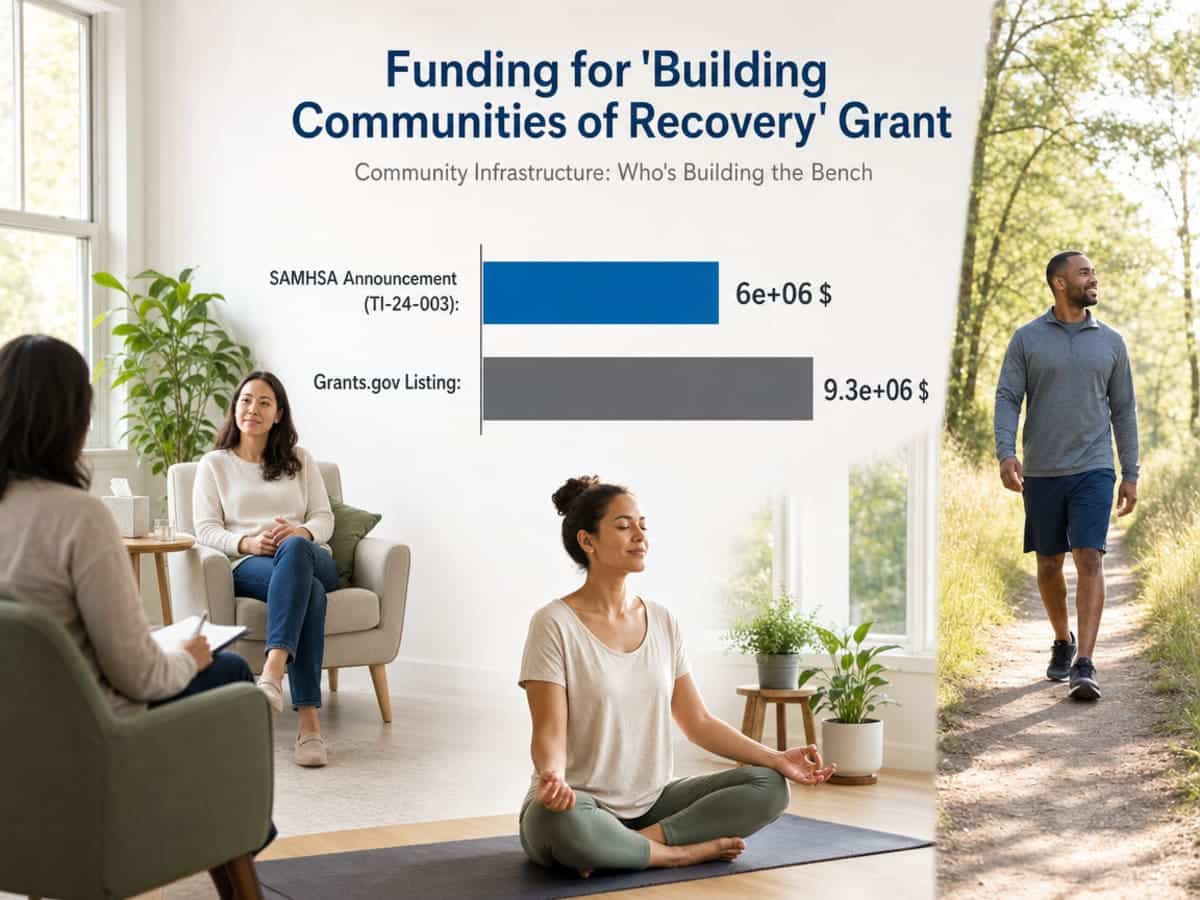
This community infrastructure is currently receiving significant funding. For instance, SAMHSA’s Building Communities of Recovery program supports organizations that mobilize community resources for individuals with substance use disorders and co-occurring mental health conditions. While funding figures may vary between agency announcements and grants portals (e.g., roughly $6 million in one announcement versus $9.3 million on Grants.gov for the same program), this discrepancy highlights that community-level recovery capital is an evolving area receiving increased attention. This is particularly relevant for individuals in locations like Dallas, Nashville, or Kansas City, as research consistently shows that the support from a counselor is only one part of the recovery equation. Studies on recovery homes, for example, demonstrate that both individual hope and a sense of community predict a higher quality of life, reinforcing SAMHSA’s emphasis on the combined power of hope and community in fostering recovery. Engaging in integrated care means accessing a network where peer support, community groups, and clinical services are aligned to work together.8,9,11
What Integrated Outpatient Care Looks Like in Practice
One Intake, One Chart, Psychiatry and Counseling Together
Many individuals seeking care for anxiety, depression, or substance use often experience fragmented treatment: starting with a therapist, facing long waits for a psychiatric referral, and repeatedly recounting their history to different providers. This disjointed process can lead to a loss of momentum in treatment.
Integrated outpatient care addresses this by streamlining the process. It involves a single intake, a shared medical chart accessible to all clinicians, and the co-location of psychiatry and counseling services, whether physically or virtually. This ensures that therapists are aware of medication adjustments made by prescribers, and prescribers are informed about discussions in therapy sessions. When changes occur, the response is coordinated rather than delayed. This structure aligns with SAMHSA’s concept of a recovery-oriented system of care: a coordinated network of person-centered services that leverages individual and community strengths to enhance health, wellness, and quality of life for those with mental health and substance use conditions. For working adults, this translates into practical benefits such as fewer intake processes, simplified scheduling, and reduced need to navigate communication between disparate offices.6
Medication Management Without a Separate Referral
The need for medication management often creates a significant barrier in treatment, especially when therapists cannot prescribe and referrals to psychiatrists involve lengthy waitlists. This fragmentation can cause treatment plans to stall and lead to individuals disengaging from care.
Within an integrated outpatient model, medication management is seamlessly incorporated with counseling services. A psychiatric evaluation is part of the initial intake, and prescription adjustments are made in direct consultation with the counselor, based on weekly progress. For example, if an SSRI dosage needs modification due to increased anxiety during a demanding work period, this can be addressed without requiring a new referral or establishing a new patient-provider relationship. This coordination is particularly crucial when substance use is involved, as interactions between medications and substances necessitate open and thorough discussions. Such conversations are more easily facilitated when the prescriber is already familiar with the patient’s comprehensive history. This approach ensures a unified team, a consistent plan, and a single point of contact for ongoing care.
Telehealth and Evening Sessions for Real Schedules
For many working adults, the primary obstacle to starting care is scheduling. Traditional appointments during business hours often force individuals to choose between their employment and their treatment. Telehealth significantly alters this dynamic. A session conducted from a home office at 6:30 p.m., with a laptop and privacy, offers a practical solution that integrates into existing life commitments. For individuals managing anxiety, depression, or substance use alongside demanding careers, evening and virtual appointments are not a compromise but often the most sustainable form of care. This approach aligns with SAMHSA’s objective of extending treatment into daily environments where recovery is actively lived, rather than confining it to clinical settings. A virtual check-in from home becomes a central component of treatment, not merely a workaround. In practice, this means access to telehealth psychiatry, telehealth counseling, evening appointment slots, and direct interaction with a clinician who has immediate access to your medical chart.5
Access Across Texas, Tennessee, Oklahoma, and Kansas City
Geographic location should not dictate access to comprehensive care. Mind Body Optimization offers in-person clinics across Texas, including Plano, Fort Worth, Alliance, Southlake, Leon Springs, San Antonio, and Waco. In Tennessee, locations include Chattanooga, Franklin, and Knoxville. Oklahoma is served via telehealth, and the Kansas City service area is a new addition, providing integrated psychiatry and counseling both in-person and virtually.
The table below outlines available services by region:
Region | In-Person Cities | Telehealth | Care Categories |
|---|---|---|---|
Texas | Plano, Fort Worth, Alliance, Southlake, Leon Springs, San Antonio, Waco | Yes | Psychiatry, counseling, medication management, dual diagnosis |
Tennessee | Chattanooga, Franklin, Knoxville | Yes | Psychiatry, counseling, medication management, dual diagnosis |
Oklahoma | Telehealth statewide | Yes | Psychiatry, counseling, medication management, dual diagnosis |
Kansas City service area | Telehealth | Yes | Psychiatry, counseling, medication management, dual diagnosis |
This multi-state coverage ensures continuity of care. If an individual relocates, their medical chart and clinical team remain coordinated. This aligns with SAMHSA’s vision of a recovery-oriented system of care—person-centered services designed to integrate with an individual’s life, rather than disrupt it. For working adults, this means recovery can be sustained within their weekly routine, rather than being constantly interrupted by logistical challenges.6
A Realistic First Step This September
Take Your Next Step Toward Sustainable Recovery
Connect with support that fits your schedule and meets you wherever you are in your recovery journey.
Frequently Asked Questions
What is National Recovery Month and when is it observed?
National Recovery Month is a federal observance held every September, launched in 1989 and coordinated by the Substance Abuse and Mental Health Services Administration (SAMHSA). It exists to promote evidence-based treatment, honor people living in recovery, and recognize the clinicians and community workers who support that recovery. It’s been running for more than 35 years, and it now sits inside SAMHSA’s Office of Recovery.1,2
Why does SAMHSA emphasize hope as part of recovery?
Because hope is measurable, not just motivational. Research shows hope predicts abstinence at later stages of recovery and partially mediates the link between recovery progress and lower relapse risk. SAMHSA’s framing that hope and community together carry recovery forward is backed by studies on quality of life in recovery settings. That’s why you’ll hear hope treated as a clinical variable, not a slogan.10,11,12
Can I get treatment for anxiety, depression, and substance use in one place?
Yes. Integrated outpatient care is built exactly for this. One intake, one shared chart, and psychiatry and counseling running under the same roof means your therapist and prescriber are working from the same picture. That structure lines up with SAMHSA’s definition of a recovery-oriented system of care — coordinated, person-centered services for people living with mental health and substance use conditions at the same time.6
Is telehealth a real option if I have a demanding work schedule?
It is, and for many working adults it’s the version of care that actually gets kept. A 6:30 p.m. session from your home office — with a clinician who has your chart open — is real treatment, not a downgrade. It also matches what SAMHSA describes as extending care into the everyday environment where recovery is lived, rather than confining it to a clinical setting.5
Which states and cities does MBO currently serve?
Mind Body Optimization runs in-person clinics in Texas — Plano, Fort Worth, Alliance, Southlake, Leon Springs, San Antonio, and Waco — and in Tennessee, with Chattanooga, Franklin, and Knoxville. Oklahoma and the Kansas City service area are served through telehealth. Each region offers the same core mix: psychiatry, counseling, medication management, and dual diagnosis care, whether you’re seen in person or on a screen.
What’s a realistic first step if I’m considering care this September?
One appointment. That’s it. A psychiatric evaluation, a first counseling session, or a telehealth intake after work — with a team that will still be there next month and next spring. You don’t need a clean answer to every question before you call. Connect with the MBO team by location in Texas, Tennessee, Oklahoma, or the Kansas City service area, and start with the pathway that fits your week.
References
- National Recovery Month – SAMHSA. https://www.samhsa.gov/resource/recovery/national-recovery-month
- Recovery Month – 35 Years of Celebration and Commitment. https://www.samhsa.gov/blog/recovery-month-35-years-celebration-commitment
- National Recovery Month. https://www.samhsa.gov/about/digital-toolkits/recovery-month
- Recovery and Support – SAMHSA. https://www.samhsa.gov/substance-use/recovery
- Peer Support Workers for Those in Recovery. https://www.samhsa.gov/substance-use/recovery/peer-support-workers
- Recovery-Oriented Systems of Care: A Perspective on the Future. https://pmc.ncbi.nlm.nih.gov/articles/PMC8336784/
- Creating Recovery Oriented Systems of Care. https://www.govinfo.gov/content/pkg/GOVPUB-HE20-PURL-LPS113392/pdf/GOVPUB-HE20-PURL-LPS113392.pdf
- Opportunity Listing – Building Communities of Recovery. https://simpler.grants.gov/opportunity/6ea50a53-280d-4e82-9013-bdecf3cf2146
- SAMHSA Announces More Than $281 Million in Funding to Address Addiction, Overdose, Mental Illness, and Promote Recovery. https://www.samhsa.gov/newsroom/press-announcements/20260706/samhsa-announces-more-than-281m-funding-address-addiction-overdose-mental-illness-promote-recovery
- Hope and Substance Abuse Recovery: The Impact of Agency and Pathways within the Hope Construct. https://pmc.ncbi.nlm.nih.gov/articles/PMC2916187/
- Relationship of Hope, Sense of Community, and Quality of Life in Recovery Homes. https://pmc.ncbi.nlm.nih.gov/articles/PMC6086495/
- Examining the Relationships between Recovery, Hope, and Relapse. https://pubmed.ncbi.nlm.nih.gov/32567447/
- Hope and Abstinence Self-Efficacy: Positive Predictors of Negative Affect in Substance Abuse Recovery. https://pmc.ncbi.nlm.nih.gov/articles/PMC4516214/